
Do Vultures Have an Image Problem?
Often dismissed as grotesque scavengers, vultures are in fact nature’s frontline defenders against disease and decay. So why do so many people hate them?

Vultures, often maligned as harbingers of death, are among the least appreciated creatures in the animal kingdom. Despite their crucial role in maintaining ecological balance by efficiently disposing of carcasses and preventing the spread of disease, these birds suffer from a persistent image problem.
This was recently highlighted in a recent article by The Independent, which outlined how conservationists across Africa are striving to reshape that public perception, emphasizing the indispensable services vultures provide to ecosystems. I therefore thought it would be an opportune moment to delve into this question and consider whether vultures truly have an image problem, and if they do, what are the implications for their conservation?
Nature’s Cleanup Crew
Every ecosystem needs a way to dispose of the dead. Vultures fill that role with remarkable efficiency. They find carcasses fast, tear through tough hides with ease, and can clean bones bare within hours. Their stomach acid is so powerful it kills anthrax, rabies, and other deadly bacteria that would otherwise spread through soil, water, and insects.
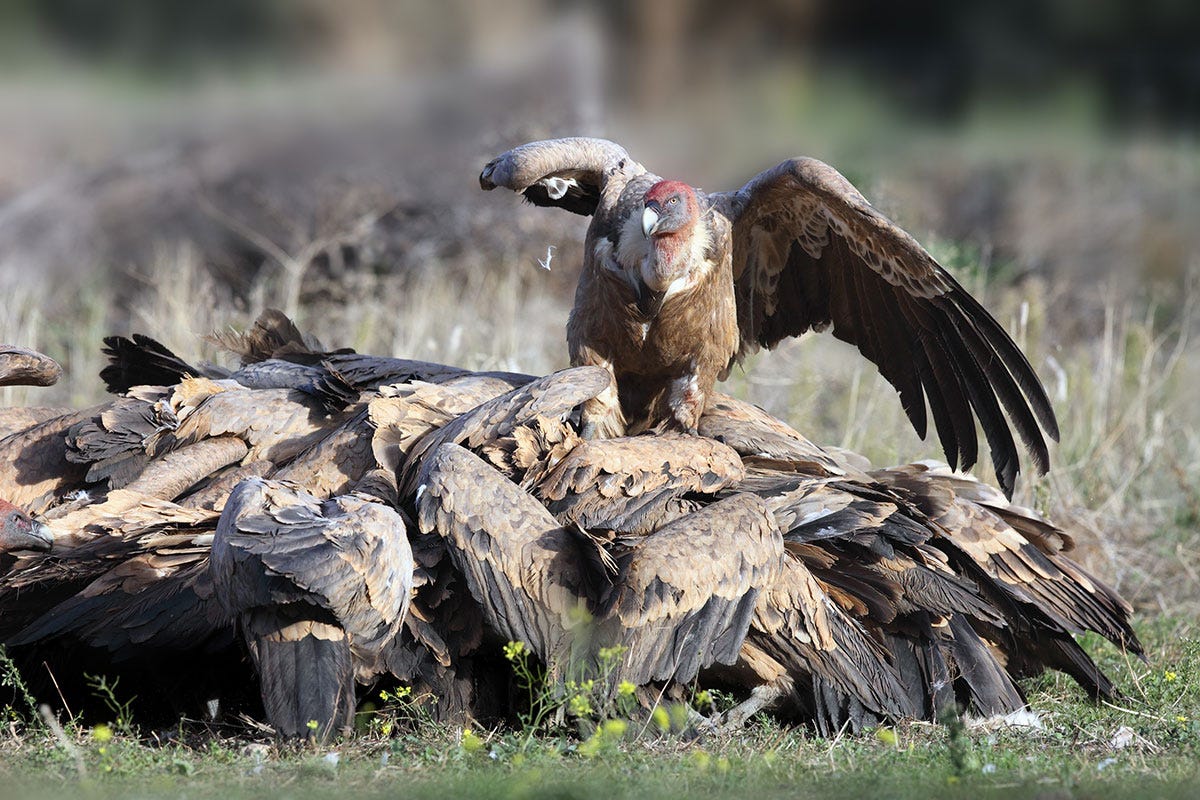
That gruesome appetite is more of a gift than a curse. In places like southern Africa, their scavenging is worth an estimated $1.8 billion a year in ecological services. That includes disease control, carcass removal, and limiting populations of scavengers like feral dogs and rats — animals more likely to pass pathogens on to humans.
When vultures vanish, the consequences don’t take long to show up.
When They Disappear, We Notice
Back in the 1990s, a crisis unfolded in India, Pakistan, and Nepal. Vulture numbers collapsed — by more than 95% in some areas — almost overnight. The culprit? Diclofenac, a common anti-inflammatory drug used to treat livestock. When cattle died, vultures fed on their medicated carcasses and died en masse of kidney failure.
What followed was grim. Carcasses that would have been gone in a few hours began to pile up. Feral dogs took over the job — but unlike vultures, they carry rabies. Human rabies infections soared, and one estimate linked the vulture die-off to over half a million excess human deaths in India in the early 2000s.
This wasn’t just an ecological disaster — it was a public health emergency. And it cost the region billions in healthcare, livestock loss, and waste management.
Eventually, diclofenac was banned for veterinary use. Breeding programs and “vulture restaurants” — places where safe, drug-free carcasses are provided — helped stabilize a few populations. But the road back has been slow and uncertain.
Why Do People Hate Vultures?
It’s a fair question. Why do we fear or loathe a bird that does so much good?
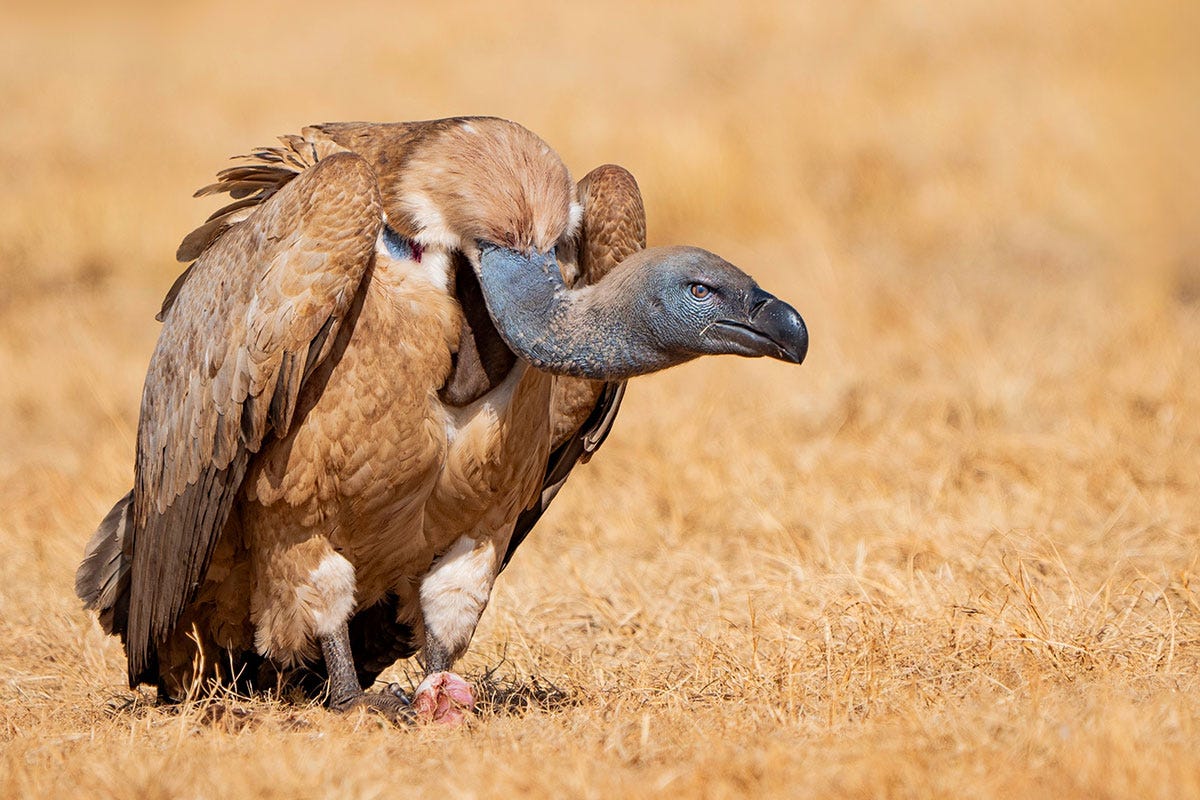
Part of it is looks — vultures aren’t what most people would call majestic. Their bald heads, designed to stay clean while feeding, are often read as grotesque. Their hunched posture and scavenging behavior haven’t helped either. Across cultures, they’ve long been seen as omens of death or decay.
Even the language we use betrays our bias. Calling someone a “vulture” usually implies greed or cruelty. And in pop culture — think The Jungle Book or The Lion King — vultures are either creepy, comical, or lurking threats.
In parts of Africa, traditional beliefs have made things worse. Some communities believe vultures have supernatural powers — that they can see the future or bring luck. This has fueled a black market for vulture heads and body parts, used in rituals or charms. It’s a dangerous myth, and one that’s contributed to their decline.
Unsung Sentinels
What many people don’t realize is that vultures are more than cleanup crews — they’re also environmental sentinels. In many African parks, rangers track vultures to locate poaching sites. When a flock begins circling in an unusual area, it often means something’s died — and that can lead to the discovery of an elephant carcass or illegal hunting site.
Some vultures have even been fitted with GPS trackers. When one stops moving, or when several cluster in one area, it often points to a poisoned animal — and an urgent need for intervention.
In this way, vultures have become unlikely allies in anti-poaching efforts.
Built for the Job
Vultures are what biologists call “obligate scavengers.” That means they don’t just scavenge because it’s easy — they literally can’t survive without carrion. They’ve evolved to handle the nastiest pathogens and toughest meals.
Their bare heads aren’t a sign of decay — they’re a clever adaptation. Feathers would trap bacteria and blood during feeding. With smooth skin, vultures stay cleaner and healthier. Their eyesight is superb, spotting carcasses from miles away. Some species, like the turkey vulture, even have a sharp sense of smell — rare among birds.
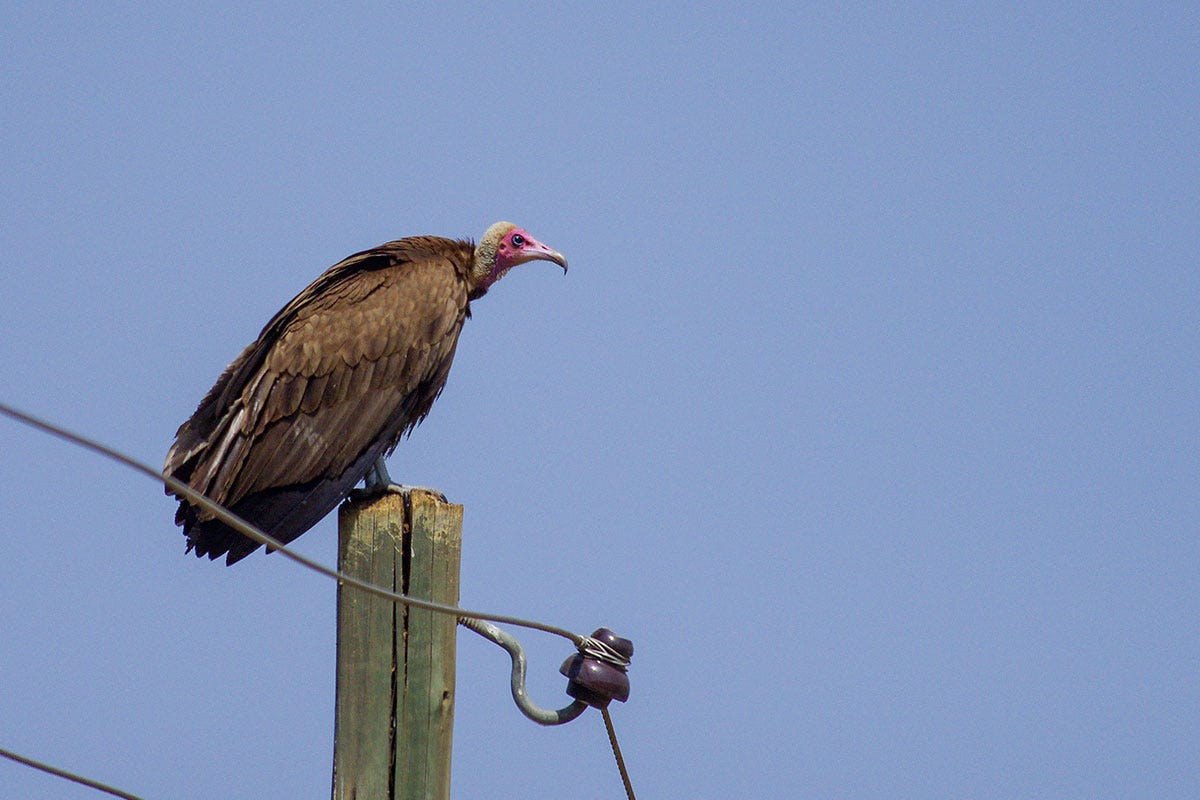
Different species also play different roles at a carcass. Larger vultures, like the lappet-faced, tear through thick hides. Smaller ones, such as the hooded vulture, get into crevices the others can’t. It may look chaotic, but there’s a kind of teamwork at play.
And yes — a group of vultures has some of the best collective nouns in the animal kingdom. Circling in the sky? That’s a kettle. Perched in trees? A committee. Feeding together on the ground? A wake.
An Extraordinary Outlier
One vulture deserves special mention: the bearded vulture, or lammergeier. Found in the mountains of Europe, Asia, and Africa, it stands out in every way.
For starters, it dyes its feathers. Really. It bathes in iron-rich soil to stain its white plumage a rust-orange color — possibly to intimidate rivals or attract mates. No one’s entirely sure.
More impressively, it eats bones. Not just gnaws on them — eats them. The bird will carry large bones high into the air, drop them onto rocks to crack them, then feast on the fragments. Up to 90% of its diet is bone. It’s one of the few animals in the world to digest such a calcium-heavy meal.
Threats from All Sides
Globally, vultures are in serious trouble. In Africa, seven of the continent’s eleven vulture species are now endangered or critically endangered.
Poisoning remains the biggest threat. Sometimes it's unintentional — a carcass treated with a common pesticide or painkiller can kill dozens of vultures. Other times, it's deliberate. Poachers have been known to lace elephant carcasses with poison to kill vultures that might reveal the kill site.
Then there’s infrastructure. Power lines electrocute hundreds of vultures each year. Wind turbines present a collision risk. And shrinking habitats, along with growing trade in vulture parts for traditional medicine, compound the danger.
A Shift in Perspective
Not everyone has given up. Conservationists around the world are fighting to save these birds — and change how people see them. Across the globe, campaigns like International Vulture Awareness Day are helping to rebrand vultures not as villains, but as vital to public health and the environment.
Governments are starting to act too. Countries like Kenya and Nigeria have launched national action plans to protect vultures. Policy shifts, habitat protections, and safer infrastructure are slowly making a difference.
More Than Just a Bird
In the end, the story of the vulture is about more than one species or one continent. It’s about how we perceive value in nature. Vultures do the dirty work. They clean up messes most animals — and most people — wouldn’t go near. And for that, they’ve been feared, ignored, and misunderstood.
But their absence leaves a void. Disease spreads. Ecosystems falter. The chain breaks.
So maybe it’s time to see them differently — not as harbingers of death, but as guardians of life.