
The White-tailed Eagle: The Revival of Britain’s Largest Bird of Prey
After a century of absence, the white-tailed eagle has returned to British skies through carefully managed reintroduction projects across Scotland and southern England

After a week talking about dire wolves and de-extinction, I’m going to pivot back this week to rewilding, and a story about the reintroduction of one of Britain’s iconic birds - the white-tailed eagle. For centuries, this massive sea eagle lorded over Britain’s skies, its eight-foot wings casting shadows over lochs and coastal cliffs. By the early 20th century, however, the sunlit eye had vanished. Relentless human persecution drove the white-tailed eagle to extinction in the British Isles. Now, in a remarkable ecological saga, this lost monarch is reclaiming its realm. The reintroduction of the white-tailed eagle across Britain – from the wilds of Scotland to the chalk cliffs of the Isle of Wight – is a story of ecological revival, scientific dedication, and the slow mending of an ancient relationship between predator and place.
A Vanished King of the Skies
Not long ago, the absence of the white-tailed eagle (also known as the sea eagle) was keenly felt by ecologists and storytellers alike. Historically, these eagles were ubiquitous. As late as the 18th century, they bred across southern England – place names along the coast, from Cornwall to Kent, still carry echoes of the eagle’s presence. Archaeological finds confirm that white-tailed eagles soared over Britain even in Roman times. Estimates suggest there may have been as many as 1,000 breeding pairs in Britain in the Dark Ages. But by the Victorian era, attitudes had hardened: gamekeepers, fishery owners, and farmers saw the giant raptors as vermin or competition. One Highland landowner quipped, “When you see seven eagles at one time in the sky, it is time to thin them out” – a chilling encapsulation of the prevailing mindset that sealed the eagle’s fate.
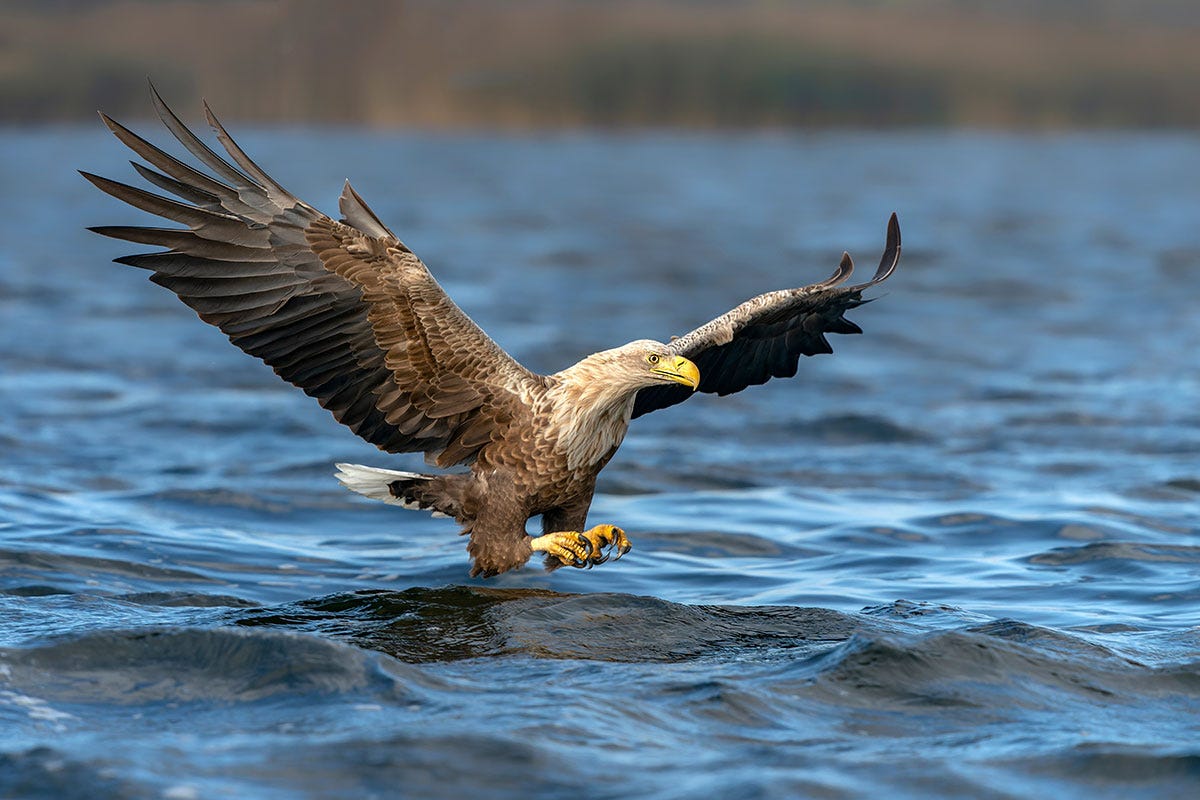
The persecution was systematic and sustained. Throughout the 19th century, shepherds and estate hunters shot or poisoned eagles, while egg collectors raided nests. By 1780, the last breeding pair in southern England nested on Culver Cliff on the Isle of Wight. In Wales, the last known nest was gone by 1860. The species clung on in the far north-west of Scotland for a few more decades, but even there its days were numbered. The final known pair in Scotland bred on the Isle of Skye in 1916, and two years later, in 1918, the very last white-tailed eagle in Britain – an aged, cream-coloured female – was shot in Shetland. A creature that had inspired legends was gone, wiped out by human hands. Britain’s largest bird of prey was now a ghost.
The Long Road to Reintroduction
The extinction of the sea eagle in Britain was a local tragedy that could still be reversed. Decades later, a new generation of conservationists dared to imagine the eagle’s return. The first tentative attempt came in 1968, when a few eaglets from Norway were released on Fair Isle (between Orkney and Shetland). That trial taught valuable lessons even though it did not establish a population. Armed with growing knowledge, a full reintroduction program launched in the 1970s. From 1975 to 1985, conservationists led by the Nature Conservancy Council (now NatureScot) and the RSPB released 82 young white-tailed eagles on the Isle of Rum in the Scottish Hebrides. Eaglets were collected from wild nests in Norway (where the species remained relatively common) and carefully transported to Scotland – a Herculean effort in an era before modern wildlife tracking. These Norwegian transplants were raised in holding aviaries on windswept Rum until ready to fledge into the wild.
Reestablishing an apex predator is not an overnight feat. White-tailed eagles take around five years to reach maturity and breed. After the last release in 1985, there was a nervous wait: would any of these young pioneers survive to adulthood and start a dynasty? At last, in 1985, a pair of reintroduced eagles nested on the Isle of Mull and successfully raised a chick – the first sea eagle born in Britain in over 70 years. It was a pivotal moment: the “extinct” eagle was breeding in the wild again. From that singular nest, a slow but steady rise began. Through the 1990s and 2000s, the reintroduced population in western Scotland grew and spread. By 2007, there were over 40 pairs established, mainly along the Inner Hebrides and western coast. The once-empty skies now resounded with wild, high-pitched eagle calls echoing over Mull, Skye, and Ardnamurchan.
Encouraged by success in the west, conservationists looked to other corners of the eagle’s former range. A second phase of Scottish reintroduction took place on the east coast between 2007 and 2012, with more Norwegian youngsters released in Fife to encourage recolonization of eastern Scotland. That effort bore fruit in 2013, when a pair of white-tailed eagles nested successfully in the Scottish Highlands east of the Great Glen – the first in that region in modern times. By 2020, the Scottish population was firmly self-sustaining and expanding. There are now more than 150 breeding pairs of white-tailed eagles in Scotland, a spectacular comeback for a bird once completely gone. These include around 22 pairs on the Isle of Mull alone, where the sight of an eagle soaring over coastal lochs has become almost routine – though no less awe-inspiring for its regularity.
The success in Scotland set the stage for returning eagles to England. Ecologically, much of England (and Wales) contains suitable habitat and abundant prey for these birds, but natural recolonization across the North Sea or the English Channel was unlikely on its own, given the distances and the English Channel barrier. In 2019, an ambitious English reintroduction began, centred on the Isle of Wight off England’s south coast. The Isle of Wight was chosen in part because it was the last redoubt of eagles in southern England centuries ago, and also for its excellent habitat: quiet wooded cliffs and nearby estuaries teeming with fish and waterbirds. The idea was that eagles released on the Isle of Wight could eventually spread east and west along the southern coastline, restoring the species to England and linking up with populations in Scotland, Ireland, and maybe mainland Europe.
The project, spearheaded by the Roy Dennis Wildlife Foundation and Forestry England, received the green light after extensive feasibility studies and public consultation. Beginning in 2019, batches of juvenile eagles have been translocated under license from wild nests in Scotland down to the Isle of Wight. Just as in the early Scottish program, the birds are held temporarily in large pens and carefully fed, then released once they’ve settled. The goal is to release up to 60 young eagles over five years. So far, 37 have been released through summer 2024, of which 22 are known to be alive and roaming – a survival rate that reflects the inherent risks young raptors face. But already, some of those first English pioneers have begun to establish territories.
In the spring of 2023, conservationists were “utterly elated” to confirm that a pair of the released eagles had nested and hatched a chick – the first eagle born in England since 1780. The male chick, secreted in a tall tree nest somewhere in southern England, took to the wing in July 2023, two-and-half centuries after his distant ancestor last flew over the Isle of Wight. By summer 2024, at least three pairs of white-tailed eagles were bonded in southern England, and two wild-hatched chicks fledged that year. The English south coast, devoid of sea eagles for generations, now hosts these magnificent birds once again – an ecological reunion long in the making.
Wingspread and Waters: Habitat and Hunting
To understand the ecological role of the white-tailed eagle, one must see it in its element. This is a bird of coastlines, lochs, and wetlands – an apex predator that rules both water and sky. White-tailed eagles typically nest near large bodies of water, whether sea lochs, estuaries, or inland lakes. They require tall, sturdy trees or cliff ledges to build their huge stick nests (some nests grow to over six feet across over years of use) and need an ample supply of food within a reasonable range. In Scotland, prime eagle territory includes the sea lochs and glens where sheltered waters abound with fish and seabirds, and ancient forests or coastal cliffs provide secure nesting sites. The Isle of Wight similarly offers wooded cliffs and proximity to rich estuaries like the Solent, making it an ideal release site.
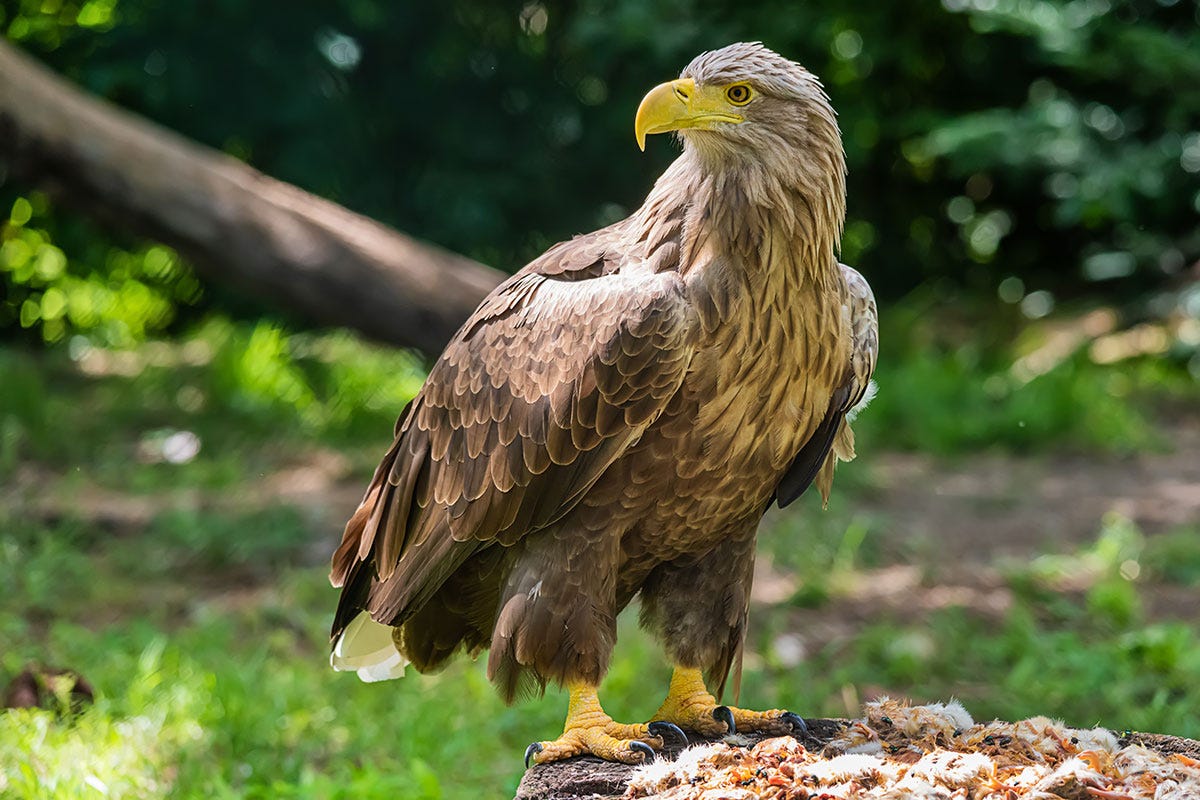
The diet of Haliaeetus albicilla is extraordinarily broad. As generalist hunters and scavengers, these eagles adjust to what the landscape offers. Fish are often preferred when available – a hunting white-tailed eagle will patroller coastlines and shallow waters, talons poised to snatch an unwary fish near the surface. In spring and summer, fish make up a large part of their diet. One Isle of Wight male was observed plucking grey mullet from the Solent shallows with consummate ease. Waterbirds – ducks, geese, gulls, and waders – become targets especially in autumn and winter. Eagles will ambush birds on the water or in marshes, and they won’t hesitate to raid colonies of gulls or terns (though the smaller birds put up fierce mobbing defence). In some parts of Europe, waterfowl and seabirds form a large portion of the eagles’ prey; for instance, remains of fulmars (a seabird) were found in 30% of examined eagle nests in a recent Scottish study.
Mammals are on the menu too. Eagles will catch rabbits and hares on open ground and have been known to tackle sizable prey like young foxes or even fawns on rare occasions. They are also infamous (or famous) for scavenging – carrion is an important food source, especially in winter when live prey is scarce. An eagle’s keen eyesight can spot a dead deer or washed-up fish from high above, and the bird will descend to feed alongside ravens and buzzards. A study in Germany found that carrion comprised nearly 30% of the white-tailed eagle’s winter diet. Essentially, these raptors clean up carcasses in the landscape much like vultures do in warmer climates, providing a useful ecological service by recycling nutrients and limiting rot and disease spread.
Their versatility is astonishing. Over 120 different prey species were recorded at eagle nests across Scotland over a 20-year study. Birds made up roughly two-thirds of identified prey remains, mammals about one-quarter, and fish the rest. Interestingly, researchers note that those numbers likely underrepresent fish, as fish bones are digested or scattered more completely than feathers or fur. Coastal nests showed mostly seabirds and fish remains, whereas nests further inland had more ducks, wading birds, and rabbits. As eagles slowly expand into England’s interior, we may see them frequent big wetlands (for waterbirds) and even reservoirs or lakes with plentiful fish. Continental Europe offers a clue: in the Netherlands and Germany, white-tailed eagles have bred in surprisingly human-dominated landscapes of lakes and polders, indicating an ability to adapt if given safe nesting spots and rich waterways.
One question that has loomed over the eagle’s return is: will they threaten livestock or other wildlife? Historically, the outrage that led to their extermination was partly fuelled by claims that eagles snatch lambs or poultry. Scientifically, the eagle is more scavenger than livestock-killer. They may occasionally take a live lamb or piglet, but evidence suggests this is relatively rare and often involves lambs already sick or dead. A comprehensive study of Scottish eagles found lamb remains in only 6% of all prey items at nests. Moreover, as the eagle population grew and dispersed into areas with natural prey, lamb predation dropped further – the newest generation of eagles relies largely on wild fish and birds. Researchers found that earlier reintroduced eagles in the 1980s did scavenge dead sheep and lambs more often (perhaps because, as naive juveniles, they took easy meals) but now most breeding eagles feed predominantly on wild prey. In places like Norway and Denmark, where sea eagles coexist with sheep farming, direct conflicts are minimal. This hasn’t entirely silenced the fears, but it provides strong ecological reassurance: Britain’s returning eagles are unlikely to become the sheep-stealing menace of lore.
As for other wildlife, studies indicate that white-tailed eagles slot into the ecosystem without causing major disruption. They are apex predators, but not hyper-specialized ones that would crash a prey population. For example, conservationists in Norfolk worried eagles might decimate colonies of rare wading birds. Yet experience from other countries shows waders and wildfowl soon adjust to the occasional eagle presence. In fact, the disturbance eagles cause when they fly over a marsh is similar to that of native peregrine falcons – waterbirds take cover briefly, then resume normal activity. Gulls and terns will aggressively mob an intruding eagle to defend their nests, often succeeding in driving off the much larger bird. Over time, a new balance is struck. Additionally, some ecologists note that eagles might help check abundant mesopredators like foxes or corvids by either preying on them or competing for carrion – which could indirectly benefit ground-nesting birds. And anecdotally, the eagles’ taste for carrion means they might actually reduce lamb losses to disease by cleaning up carcasses that can spread infections among flocks.
Following the Eagles: Science and Surprises
The return of such a charismatic species has provided a living laboratory for science. Each released eagle is fitted with a tiny satellite transmitter, harnessed like a lightweight backpack, allowing researchers to track its every voyage. This technology has unveiled a world of eagle wanderlust that previous generations could only guess at. Young white-tailed eagles are great explorers: they range astonishing distances before settling. Scottish-released juveniles from Mull have been recorded roaming to Ireland and back. Likewise, some of the Isle of Wight birds wasted no time in broadening their horizons. One eagle dubbed G463 made headlines when it became the first of the English cohort to brave the English Channel – it crossed from Dover to Calais in just half an hour of powerful flying. Once in France, this adventurous bird toured the Normandy coast for days, then looped back across Brittany and eventually returned home to southern England after several weeks abroad. Another young eagle astonished observers by undertaking a grand tour of Europe: over two years, the bird travelled some 16,000 km (10,000 miles) through the Netherlands, Belgium, Germany, and even up to Scandinavia, before navigating back to the Isle of Wight area. These odysseys demonstrate how interconnected Europe’s wild spaces are – and how an eagle reintroduced in one country can readily visit others, stitching together ecosystems.
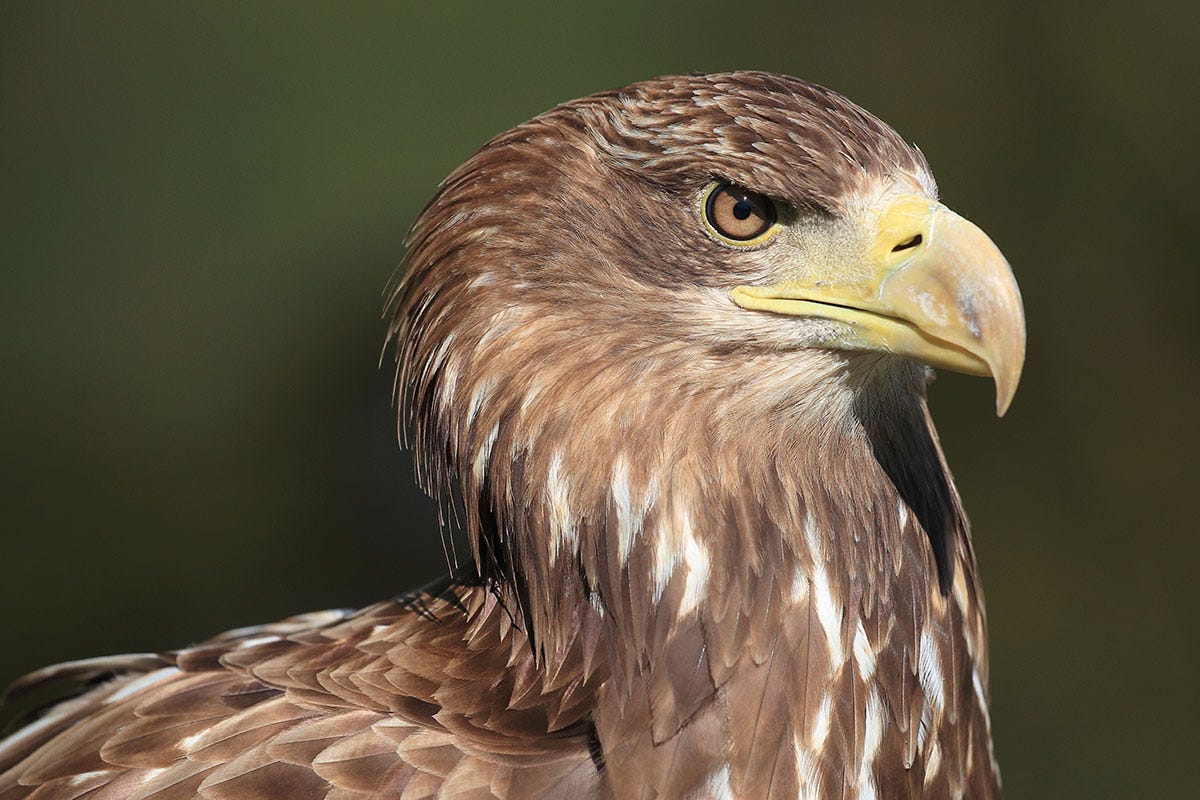
Not all wanderers make it back. Of the initial 25 eagles released on the Isle of Wight from 2019–2021, nine had died by mid-2023. Some losses were natural – one drowned in a reservoir after a probable collision with power lines, another likely starved or fell ill. But disturbingly, a couple of deaths showed signs of human-caused poisoning. Illegal persecution remains an unfortunate reality (a point we explore in the second article). Still, the survival rate is considered encouraging given the challenges these juveniles face learning to hunt and avoid hazards. By summer 2024, as noted, 22 of 37 released English eagles were alive and being monitored. Several have settled into what look like home ranges along the south coast, favouring areas like the New Forest, Poole Harbour in Dorset, and estuaries of East Anglia. In one heartening case, a female eagle translocated from a nest in the Scottish Highlands was released on the Isle of Wight, then later paired up with a male of the same cohort; in 2023 this pair produced that historic English chick. Fittingly, the female – originally from a wild nest on the isle of Skye – helped bring the species full circle in England.
Scientists are studying more than just where the eagles go. The recent diet study by RSPB Scotland, spanning 20 years of data, has given unprecedented insight into what these eagles eat and how that has changed as the population expanded. By cataloguing over 11,000 prey remains at nests, the researchers confirmed that fish and seabirds are the cornerstone of the eagle’s diet in coastal areas, whereas inland nests see more ducks and rabbits. Crucially, they quantified the controversial lamb issue, showing it’s a small fraction of eagle diet and has declined over time. This kind of evidence is vital in guiding management. In Scotland, a Sea Eagle Management Scheme provides support to farmers where eagles nest, offering advice and even financial assistance such as funding for extra shepherding or diversionary feeding measures. The new data will help target those efforts to the rare “problem eagles” or hotspot areas, rather than treating all eagles as a threat.
Another area of active research is how white-tailed eagles share space with golden eagles. Britain’s uplands are also home to the golden eagle (Aquila chrysaetos), a slightly smaller cousin that favours mountainous terrain and open moor. Golden eagles survived in Scotland when sea eagles died out, and some wondered if the two might clash when sea eagles were brought back. Studies so far have shown they largely partition resources – golden eagles stick to high moors hunting hares and grouse, while white-tailed eagles keep to coasts and glens with fish and seabirds. In areas where they overlap, their diets differ enough to avoid direct competition. Both species coexisted in the past and seem to be doing so again. There are occasional aerial spats – a golden might try to mob a sea eagle that comes too close, or vice versa – but nothing indicating that one is displacing the other. In fact, having both eagles present is a sign of a healthy, multi-layered ecosystem, with two apex predators dividing the sky.
An Ecosystem Enriched
From an ecological standpoint, the return of the white-tailed eagle is mending a food web that was long missing a top-tier member. These eagles are often described as “aquatic scavengers” or “marine apex predators.” Their presence can have subtle ripple effects. On Scotland’s Isle of Rum, researchers noted that after eagles returned, deer carcasses were cleaned up faster, possibly reducing opportunities for scavengers like foxes that also prey on ground-nesting birds. Around nesting sites, eagles keep a check on raven populations by occasionally preying on eggs or young ravens (and ravens, as lamb predators themselves, might thereby be curbed). It’s a complex cascade of interactions, but nature is generally adept at self-regulation if given time.
Perhaps the most visible ecological impact is on human observers: eagles change how people experience the landscape. Birdwatchers travel long distances for a glimpse of these “flying barn doors” with their unmistakable silhouette of fingered wing tips and gleaming white tail base. Wildlife tourism has flourished on the west coast due in large part to eagles. On Mull, guided boat trips carry visitors hoping for that magical moment when an eagle plummets from the sky to snatch up a fish in its talons. Such moments have real economic weight: studies estimate the presence of white-tailed eagles generates up to £5 million annually for the Isle of Mull’s economy and around £2.4 million for Skye. The eagles, once seen only as competitors, are now recognized as contributors, bringing wealth to remote communities simply by being themselves.
As the restoration continues, conservationists remain vigilant. The birds are protected by law under the Wildlife and Countryside Act 1981, which makes it illegal to harm them or disturb their nests. Breeding success is monitored each year, and every known nest in Scotland and England is watched with a mix of pride and protectiveness. Challenges like illegal poisoning or accidental deaths (such as collisions with wind turbines, which are fortunately rare for eagles given their strong flight agility) are addressed through law enforcement and mitigation measures. Each eagle carcass found is necropsied to determine cause of death – a detective process that has caught instances of deliberate poisoning on shooting estates. The hope is that these incidents remain infrequent and punishable enough to deter repeat offenses.
At a broader scale, Britain’s reintroduction of the white-tailed eagle aligns with international commitments to restore native species. Under the Convention on Biological Diversity and other agreements, the UK is encouraged – even obligated – to reintroduce extinct native wildlife where feasible. The sea eagle project is often hailed as a flagship of “rewilding” in the UK, demonstrating that even large predators can be brought back to a densely populated modern landscape with planning and public support. It hasn’t been without controversy or growing pains, as we will see in the companion article on the community and political dimensions. But ecologically, the return of the white-tailed eagle stands as a triumph of patience and perseverance.
In 2025, if you journey to the windswept cliff of Mull or a quiet estuary in southern England at dawn, you just might witness what our ancestors took for granted: the silhouette of a white-tailed eagle emerging out of the mist, broad wings steady as it scans the water below. The sunlit eye of the eagle gleams once more over a wilder, richer British landscape. The ecological chapter of this story is one of hope: a species we extinguished has been given a second chance, and in healing its story we begin to heal the broader tapestry of life that we ourselves are a part of.